Cannabis CPA Services in Fernley
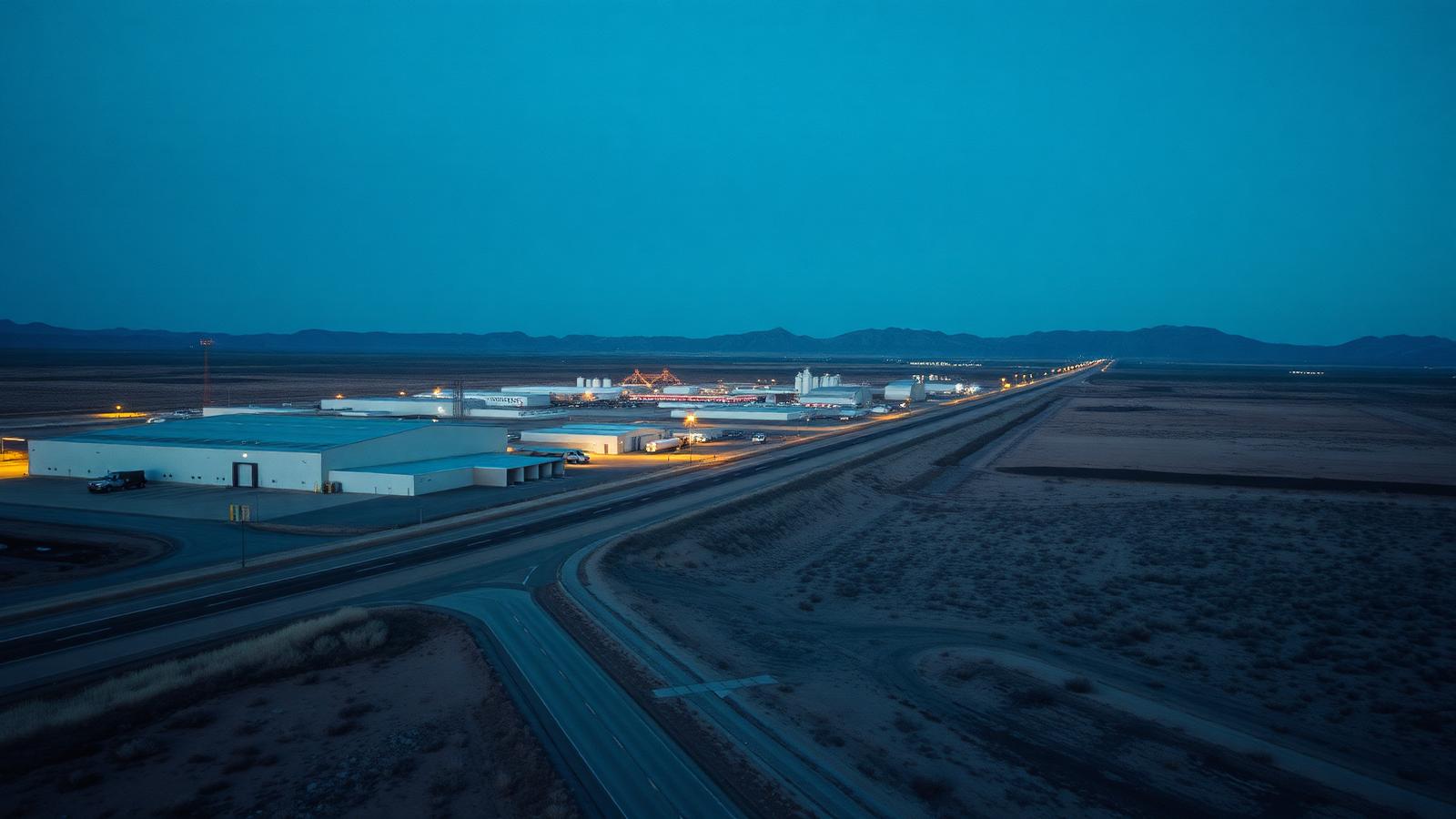
Fernley's growth over the past decade has been driven substantially by industrial and logistics development along the Interstate 80 corridor, and cannabis cultivation and production operations in the region share more in common with that industrial base than with a Reno retail storefront. Cost accounting, production throughput, and inventory management look different for a cultivation or manufacturing operation than they do for a dispensary counter.
A cannabis CPA serving the Fernley area needs to understand both sides of that equation: the retail and excise tax mechanics that apply to any Nevada cannabis license, and the production-cost accounting that matters more heavily for a cultivator or processor than for a pure retail operation. Our practice works across all license types, and the engagement scope adjusts to which side of that line a given business sits on.
Because our service model is remote, the physical distance between Fernley and the Truckee Meadows or Carson Valley does not change how the engagement runs. Reporting, reconciliation, and planning conversations happen on a set schedule regardless of which side of the county line a facility sits on.
Cannabis Accounting in Fernley
A production-oriented cannabis business needs a chart of accounts that distinguishes raw material costs, work-in-process, and finished goods, in addition to the standard separation of plant-touching and non-plant-touching activity that every Nevada license needs. Cannabis accounting set up with that structure from the outset makes cost-of-goods-sold calculations and margin analysis far more reliable than trying to back into them at year end.
For a Fernley-area cultivator or manufacturer, the accounting system also has to handle multi-stage production accurately: costs incurred at the cultivation stage need to carry forward correctly if that product moves into a processing or manufacturing operation under common ownership. Getting this cost flow wrong understates true production cost and distorts both margin reporting and 280E cost allocation.
- Chart of accounts built to separate raw material, work-in-process, and finished goods costs
- Cost flow tracking across cultivation-to-manufacturing transfers under common ownership
- Standard plant-touching versus non-plant-touching account separation for every license
- Monthly close procedures aligned with production and harvest cycles
Cannabis Bookkeeping in Fernley
Bookkeeping for a production-heavy cannabis operation in the Fernley area involves more transaction volume and complexity than a single retail location typically generates: raw material purchases, packaging supplies, utility costs tied to cultivation, and labor allocated across production stages all need to be captured and categorized accurately. Cannabis bookkeeping that keeps pace with that volume on a weekly rather than sporadic basis prevents the kind of backlog that makes month-end close unreliable.
Bank and merchant account reconciliation still matters here too, even for a business with less direct retail cash handling than a dispensary. Distribution and wholesale transactions between licensed entities need to be reconciled against invoices and METRC transfer records to confirm the accounting matches what actually moved.
Dispensary Accounting for Fernley-Area Retail Operations
Where a licensed retail operation exists in or near the Fernley region, dispensary accounting needs to reconcile point-of-sale data with METRC package records and correctly apply the 10% adult-use retail excise tax to sales. This reconciliation work does not differ based on regional location, but it does need to interface cleanly with any upstream cultivation or manufacturing accounting if the retail operation is part of a vertically integrated business.
For a vertically integrated operator with production in the Fernley corridor and retail elsewhere in Northern Nevada, consolidated reporting that still separates each license's individual performance is often the difference between understanding which part of the business is actually profitable and simply seeing an aggregate number.
280E Accounting & Tax Planning in Fernley
Section 280E disallows most ordinary business expense deductions for cannabis operations under current federal law, and its application should be assessed based on the law and guidance in effect for the applicable tax period. Federal cannabis scheduling has been under ongoing review, but no change should be assumed to apply to a given tax year without confirming what actually took effect and when.
For a production-oriented business, 280E tax planning carries particular weight because a larger share of a cultivator's or manufacturer's total costs, direct labor, cultivation supplies, packaging, can potentially be treated as cost of goods sold rather than as a disallowed deduction, compared to a retail-only operation. Getting that allocation right requires detailed, defensible cost accounting rather than a rough estimate applied at tax time.
- Cost allocation between COGS and non-deductible operating expense for production operations
- Documentation supporting labor and overhead allocation to production costs
- Coordination between cultivation, manufacturing, and distribution entities under common ownership
- Ongoing review as guidance and enforcement positions on 280E continue to evolve
Cannabis Tax Planning in Fernley
Nevada's lack of a personal or corporate income tax shifts the state-level planning conversation toward the Commerce Tax and Modified Business Tax, both of which are tied to revenue and payroll rather than net income. Cannabis tax planning for a Fernley-area production business needs to project these obligations alongside federal 280E exposure, since a growing cultivation or manufacturing operation can cross Commerce Tax revenue thresholds faster than expected as production scales.
The 15% wholesale excise tax on fair market value applies at the point cannabis is transferred from a cultivator, which matters directly for Fernley-area cultivation operations even before any retail excise tax comes into play further down the supply chain. Planning needs to account for this tax hitting cash flow well before a final retail sale occurs.
Cannabis Inventory Accounting in Fernley
Inventory accounting is where production-oriented cannabis businesses in the Fernley region tend to face the most complexity. Physical inventory reflects what is actually on hand at the cultivation or production facility. Operational inventory, tracked through METRC, reflects the seed-to-sale movement of plants, harvested material, and finished product as it moves through the state's system. Financial inventory reflects how the general ledger values and carries that same material for cost of goods sold and margin purposes. A cultivation or manufacturing operation moving material through multiple production stages has more opportunities for these three to drift apart than a simple retail operation does.
Inventory accounting for this kind of business needs a disciplined reconciliation cadence between physical counts, METRC records, and the general ledger, along with a consistent costing methodology applied across cultivation batches or manufacturing runs. Without that discipline, gross margin figures by product line become unreliable, and pricing decisions built on unreliable margin data tend to compound the problem.
- Reconciling physical counts, METRC records, and ledger valuation across production stages
- Batch or run-level costing for cultivation and manufacturing operations
- COGS calculations that correctly reflect labor and overhead allocated to production
- Margin analysis by product line to identify underperforming SKUs or processes
Cannabis Financial Reporting in Fernley
Financial statements for a cultivation or manufacturing business need to present production costs, inventory valuation, and 280E adjustments clearly enough that an owner, lender, or investor can actually assess performance. Financial reporting built around this level of detail supports decisions about capital investment in equipment or facility expansion, which is often more relevant for a production-heavy Fernley-area business than for a smaller retail-only operation.
Regular reporting cadence matters here too. A monthly or quarterly reporting package that tracks production costs and margin trends over time gives an operator the ability to catch a cost overrun or yield problem before it shows up as a full-quarter loss.
Fractional CFO Services for Fernley Cannabis Businesses
Bookkeeping tells you what already happened in the business. Fractional CFO services address what comes next: whether a facility expansion pencils out, how to finance new cultivation or processing equipment, and how growth in production volume will affect Commerce Tax obligations and cash needs over the coming year. These questions require a different kind of financial analysis than day-to-day bookkeeping provides.
For a growing Fernley-area operation, a fractional CFO engagement provides that strategic layer without the cost of a full-time finance executive, and the work is structured around scheduled reviews rather than requiring daily on-site presence.
Cash-Flow Planning for Cannabis Businesses in Fernley
Profit is not cash, and this gap tends to be more pronounced for production-oriented cannabis businesses than for retail operations, because capital gets tied up in growing crops, work-in-process inventory, or equipment before any of it converts to sales revenue. Cash-flow planning has to forecast that timing explicitly rather than relying on an income statement that shows accrual-based profitability disconnected from actual cash on hand.
Excise tax remittance timing adds another layer: the wholesale excise tax applies at transfer, which can create a cash outflow well before the corresponding retail sale generates cash inflow further down the chain. A rolling cash-flow forecast that incorporates this timing helps a Fernley-area operator avoid being caught short during a production ramp-up or seasonal demand shift.
Accounting for Dispensaries, Cultivators & Manufacturers in Fernley
Given the region's industrial character, cultivator accounting and manufacturer accounting tend to be the more common needs for Fernley-area cannabis businesses, though dispensary accounting and distributor accounting apply where retail or wholesale distribution licenses are in play. Cultivator accounting has to track cost accumulation from clone or seed through harvest and value work-in-process crop accurately at each growth stage. Manufacturer accounting adds bill-of-materials tracking, converting raw and extracted material into finished packaged goods.
Distribution accounting, relevant for any Fernley-area business handling wholesale transfers along the I-80 corridor, needs to track transfer pricing and excise tax application at each transfer point, since errors here compound quickly across a high transaction volume business.
How Cannabis Accounting Systems Connect in Fernley
The accounting chain runs in a consistent order regardless of license type: operations generate sales and purchases, those transactions post to bank and cash accounts, bookkeeping captures and categorizes the activity, inventory and cost-of-goods-sold calculations depend on that captured data, financial statements summarize the results, tax planning depends on those financial statements being accurate, cash-flow forecasting depends on both the tax picture and the financials, and management decisions depend on the entire chain being current.
For a production-oriented Fernley business, the inventory and COGS link in that chain carries extra weight, since a larger share of total cost flows through production accounting than through simple purchase-and-resale bookkeeping. A weak link there distorts everything from margin analysis to 280E cost allocation to the cash forecast.
Common Accounting Problems for Fernley Cannabis Businesses
A recurring issue for production-heavy operators in the Fernley area is treating cultivation or manufacturing costs the same way a simple retail purchase would be treated, missing the multi-stage cost accumulation that actually applies. This tends to understate true production cost and produce margin figures that look better than they really are.
Other common problems include inventory records that drift from METRC data during periods of high production volume, 280E cost allocation methodology that was set up before the business scaled and never revisited, and cash-flow strain during facility expansion or equipment purchases that better forecasting would have anticipated.
- Production and labor costs treated as simple expense rather than allocated to inventory
- Inventory drift from METRC records during high-volume production periods
- 280E cost allocation that has not kept pace with a scaling operation
- Cash-flow strain around equipment purchases or facility expansion
Choosing a Cannabis CPA in Fernley
For a production-oriented cannabis business, it is worth asking a prospective CPA directly whether they have experience with cultivation or manufacturing cost accounting specifically, not just retail dispensary bookkeeping. The two require genuinely different skill sets, and a firm that only handles the retail side may not catch cost-flow issues specific to a growing or processing operation.
It is also worth asking how the firm handles remote engagements, since the industrial character of the Fernley area means many operators are not looking for an accountant who expects frequent in-person meetings. A clear answer about reporting cadence, communication channels, and how site visits, if any, factor into the engagement will tell you a lot about how the relationship will actually work.
Serving Fernley and Nearby Northern Nevada Markets
We provide remote cannabis accounting and tax planning to operators throughout the Fernley area and the broader Northern Nevada region, including businesses in Reno, Sparks, and Carson City. Many operators in this part of the state run production or distribution functions in one location while managing retail or corporate functions in another, and our engagement model is built to support that kind of multi-site structure.
If your business spans more than one of these Northern Nevada markets, or you are evaluating a production facility in the Fernley corridor, our locations page outlines the other Nevada areas we serve, and you can schedule a consultation to discuss your specific setup.