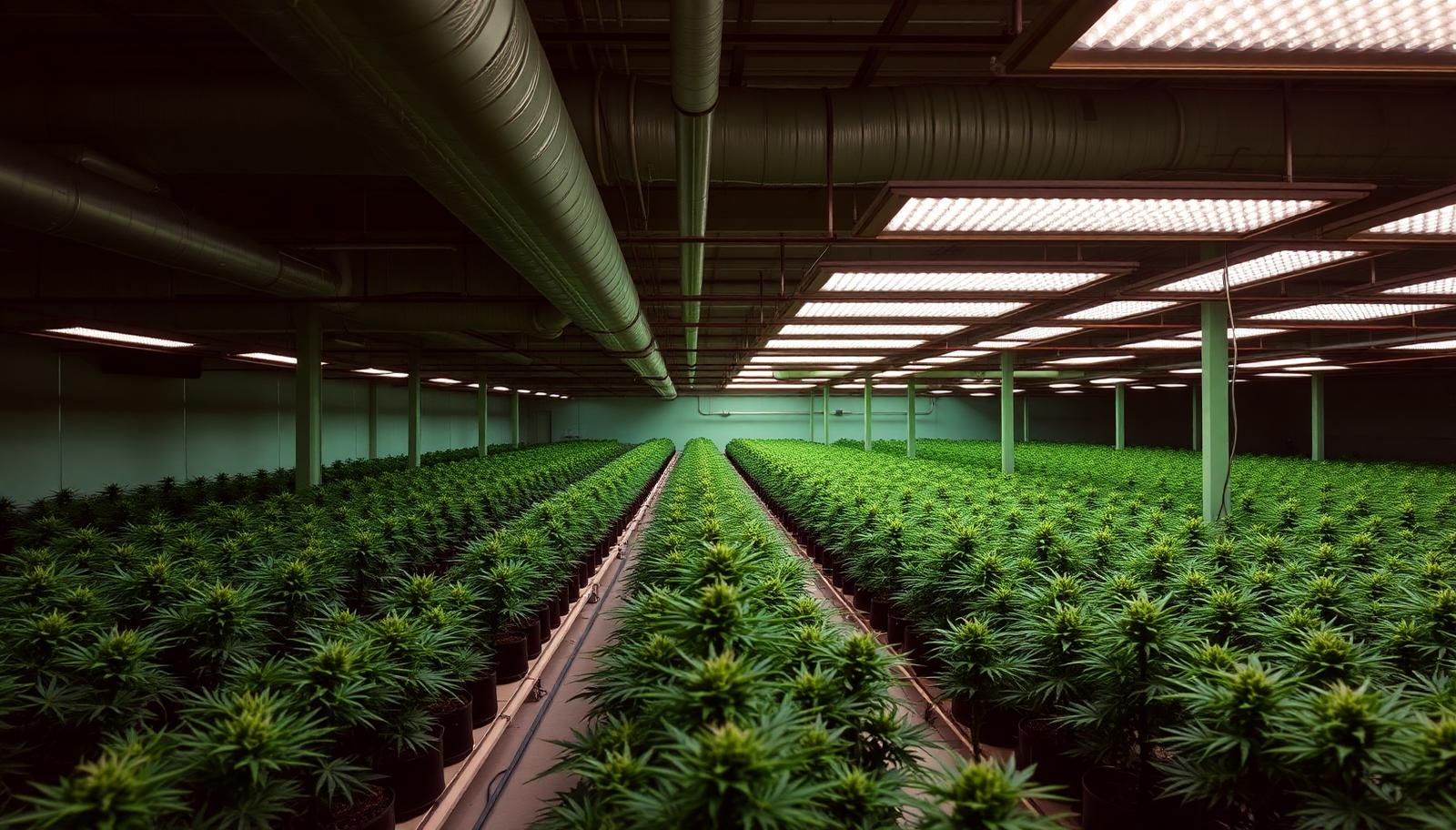
What Is Cannabis Cultivation Accounting?
Cannabis cultivation accounting is the financial process of recording, organizing and analyzing the costs and financial activity associated with producing cannabis. It covers cultivation inputs, labor, facility-related costs, production activity, harvests, inventory, cost allocation, cost of goods sold, financial statements and cash flow, and its purpose is to explain the economics of production rather than simply record transactions.
The distinction matters. Transaction recording tells you that you spent money on nutrients, payroll and power. Cultivation accounting tells you what it cost to produce what you harvested, what that inventory is worth on the balance sheet, what portion of it moved through COGS when product sold, and what gross margin the operation actually earned. Management decisions about pricing, canopy, staffing and capital investment depend on that second layer.
The chain we build for a Nevada grower runs in one direction: cultivation activity feeds production costs, production costs feed inventory, inventory drives COGS, COGS produces gross margin, gross margin flows into financial statements, those statements support tax analysis and cash-flow planning, and all of it informs management decisions. Every step depends on the accuracy of the one before it.
- Cultivation inputs, nutrients, growing media, packaging and supplies
- Production and support labor, recorded consistently period to period
- Facility costs including rent, utilities, repairs, maintenance and insurance
- Production, harvest and inventory activity translated into financial inventory
- COGS, gross margin, financial statements and cash-flow reporting
Why Cultivation Accounting Is Different From Dispensary Accounting
A dispensary primarily purchases finished inventory for resale. The cost of an item is largely established by the invoice, and retail accounting concentrates on sales, cash, purchasing and shelf inventory. Our dispensary accounting page covers that model in detail.
A cultivator produces inventory. There is no invoice that states what a harvested pound cost, because the cost is assembled over a production cycle out of labor, materials, facility usage and other production costs. That single structural difference introduces accounting questions a retailer never faces: how costs accumulate during a cycle, how production in progress is represented at a reporting date, how harvested product becomes finished inventory, and how cost attaches to units of output.
It also changes what management should be looking at. A retailer watches sell-through, basket size and shrink. A cultivator watches production cost trends, yield, cost per unit of output where reliable data exists, and the gap between when cash is spent and when the resulting product is sold. Both need clean books; the cultivator needs a cost layer built on top of them.
Cannabis Cultivation Bookkeeping
Bookkeeping is the foundation for everything else. It produces a general ledger that is complete, current and reconciled, and it captures bank activity, vendor bills and purchases, payroll, rent and facility costs, utilities, equipment, supplies, sales, liabilities, debt, and owner or investor transactions where applicable.
Consistency in coding matters more for a cultivator than for most businesses, because the same transaction data is later reused for cost accounting and production analysis. If cultivation payroll lands in one account this month and a general labor account next month, or if a nutrient purchase is coded to supplies in one facility and materials in another, no cost analysis built on that ledger will be comparable across periods.
Broad bookkeeping methodology, system setup and cleanup work is covered on our cannabis bookkeeping page and within our general cannabis accounting engagements. This page focuses on how that foundation is applied to a production operation.
Cultivation Cost Accounting
Cost accounting attempts to understand the resources consumed in producing inventory. For a grower, that means identifying which costs relate to production, deciding how they are grouped, and applying a consistent method for associating them with output.
Categories that may be relevant, depending on the facts of the business and the applicable accounting and tax treatment, include cultivation labor, nutrients, growing media, other cultivation materials, packaging, facility-related costs, utilities, equipment-related costs and other production costs. Which of these belong in inventory, and how, is not a universal answer.
This is worth stating plainly: not every cultivation expense belongs in inventory, and production-related costs do not all receive identical tax treatment. Treatment depends on the specific facts, the accounting methods the business uses, and the tax rules in effect for the relevant period. We work from your actual operation rather than a template, document the method chosen, and apply it consistently so period-over-period comparisons mean something.
- Define which cost pools the operation will use and what belongs in each
- Apply one allocation method consistently rather than re-deciding each period
- Keep supporting records that explain how amounts were derived
- Revisit the method when the facility, product mix or process materially changes
Direct vs Indirect Cultivation Costs
Direct costs are those that can be associated relatively directly with production — for example, labor performing cultivation work or materials consumed by a specific grow. Indirect costs support production but do not attach as cleanly to a particular unit or batch, such as shared facility costs, supervision or environmental systems serving multiple rooms.
The conceptual line is easy; the practical line requires judgment. A cultivation manager who spends part of the week on production and part on administration is a common example, as is a utility meter serving both grow rooms and office space. What matters financially is that the business chooses a reasonable allocation basis, applies it consistently, and can explain it.
We do not prescribe universal capitalization rules, and any accounting or tax treatment should be evaluated against your circumstances and current requirements. What we do build is a method that is documented, repeatable and defensible in the records.
Cultivation Inventory Accounting
Inventory is where cultivation accounting becomes genuinely different. Production activity moves through stages that may include cultivation inputs, active production, harvest, work in process where applicable, finished inventory, and finally sale — at which point cost moves out of inventory and into COGS.
Three different meanings of the word inventory circulate in a grow, and confusing them causes most of the disagreements we see. Physical inventory is what is actually on hand. Operational inventory is what the seed-to-sale and cultivation tracking systems say exists, expressed in plants, weights and packages. Financial inventory is the dollar value carried on the balance sheet under the business's accounting method. All three should be reconcilable; none of them is automatically the others.
Broad inventory valuation methodology, reconciliation practice and COGS mechanics across license types are covered on our inventory accounting page, and the Nevada inventory accounting guide covers the topic educationally. Vertically integrated groups should also review how the same inventory moves through manufacturers, infused product manufacturers and distributors.
- Physical inventory: what is actually on hand at the facility
- Operational inventory: quantities and stages in tracking systems
- Financial inventory: the carrying value recorded in the accounting records
- Reconciliation: explaining the differences rather than overwriting them
Cultivation Inventory and COGS
Conceptually, cost of goods sold follows a simple structure: Beginning Inventory, plus appropriate inventory additions during the period, minus Ending Inventory, equals COGS. Actual accounting is more involved than that arithmetic suggests, because determining what qualifies as an appropriate addition and how ending inventory is valued is where the real work lives.
From there: Revenue minus COGS equals Gross Profit, and gross profit expressed as a percentage of revenue is gross margin. That means inventory accuracy is not a bookkeeping detail — it is the input that determines reported profitability.
When inventory is wrong, COGS is wrong. When COGS is wrong, gross profit and gross margin are wrong, financial statements misrepresent performance, management decisions are made on distorted numbers, and tax analysis rests on figures that cannot be supported. A single overstated ending inventory balance can make a weak quarter look strong and then reverse violently in the next period.
Work in Process for Cannabis Cultivation
A cultivation business almost always has production underway that is not finished or ready for sale at a reporting date. Plants in flower, product drying or curing, and material awaiting testing all represent resources already consumed on output that has not yet been sold.
Where appropriate, accounting processes should be capable of representing that activity so period-end reporting is not misleading. Considerations typically include the stage of production, how costs have accumulated to that point, harvest timing relative to the period end, how product moves into finished inventory, and what level of precision the business genuinely needs for management and reporting purposes.
There is no universal work-in-process methodology for cannabis cultivation, and we do not pretend otherwise. The right approach depends on cycle length, facility structure, the reliability of production data and the purpose of the reporting. What matters is that the method is deliberate, documented and applied the same way each period.
Harvest Accounting
Harvest is an operational event and an accounting event, and the two are related without being identical. Operationally, a harvest produces recorded weights, packages and stage changes. Financially, it is the point at which accumulated production cost is associated with output that will become finished inventory.
Useful information sources include production records, labor records, materials consumed, operational tracking data, harvest records, inventory records and the accounting records themselves. The accounting process pulls from those sources; it does not simply copy one of them.
Where growers get into trouble is treating the operational harvest record as though it were the accounting entry. Weights recorded in a tracking system describe quantity, not cost, and they do not decide how costs accumulate, when product is saleable, or how inventory is valued. Both records are necessary, and they should agree in the ways that matter.
Seed-to-Sale Data vs Cultivation Accounting
Seed-to-sale systems primarily track operational and regulatory activity: plant and product quantities, production stages, harvests, transfers and adjustments. Accounting systems track financial effects: inventory value, production costs, COGS, assets, expenses and gross profit.
Operational data can strongly support accounting — quantities, transfers and adjustments are real inputs to inventory work — but it does not automatically replace it. A tracking system does not carry accounts payable, payroll liabilities, fixed assets, debt or equity, and it does not produce a balance sheet or a defensible inventory valuation.
The productive posture is reconciliation. Differences between operational quantities and financial inventory should be identified, explained and resolved on a schedule, rather than discovered a year later during a tax preparation scramble. We hold no affiliation with any regulator or tracking software provider; we simply work with whatever systems your facility already uses.
Cultivation Labor Accounting
Labor is often the largest controllable cost in a grow, and understanding it financially requires more than a single payroll total. Categories worth separating typically include production labor, management labor, administrative labor, and sales or other functions.
How labor is classified affects production cost analysis, departmental and facility reporting, budgeting and general financial management. If everyone lands in one account, management cannot tell whether rising payroll reflects more production, more overhead, or a shift in where people spend their time.
We help structure payroll coding so the general ledger supports that analysis, and coordinate it with the payroll process itself. Nothing here is employment-law advice, and we do not state a universal tax treatment for labor costs — classification for management reporting and treatment for tax purposes are separate questions.
Cultivation Facility Costs
Cultivation facilities carry meaningful fixed and semi-variable costs: rent, utilities, repairs, maintenance, security-related business costs where applicable, insurance, equipment costs and facility improvements. In an arid Nevada environment, climate control and dehumidification loads can make utilities one of the more significant recurring line items in the ledger.
The financial importance is twofold. First, these costs continue whether or not a harvest lands on schedule, which is why production delays hit cultivators harder than they hit resellers. Second, they are frequently shared across rooms, product lines or facilities, so how they are recorded and allocated shapes every downstream cost figure.
These costs do not automatically belong in inventory or COGS. Whether and how any facility cost is included depends on the accounting method used and the applicable rules, and that determination should be made deliberately rather than assumed.
Equipment and Capital Expenditures
Growers regularly invest in lighting, HVAC, irrigation, environmental systems, production equipment, facility improvements and other capital assets. The conceptual distinction that matters is between an operating expenditure, which is consumed in the current period, and a capital investment, which is expected to provide benefit over multiple periods and is recorded as an asset.
That distinction affects the income statement, the balance sheet and cash flow differently, and it affects how management evaluates an investment. A lighting retrofit that reduces power consumption is a cash outlay today against an expected operating benefit spread over years; the financial case should be modeled that way rather than judged on the invoice alone.
We do not state universal depreciation or tax treatment here, because it depends on the asset, the method and the rules in effect. Capital planning, financing considerations and investment modeling are covered further under fractional CFO services.
Cultivation Yield and Production Economics
Operational data becomes far more useful once it is connected to financial information. Measures worth tracking, where the underlying data is reliable, include production volume, cost per unit of output, labor per production cycle, yield trends, gross margin and production cost trends over time.
The important caution is that operational yield alone does not establish profitability. A cycle can produce more output and still be less profitable if input costs rose, product quality shifted the achievable price, or additional labor was required to get there. Yield is one variable in a financial result, not the result itself.
We do not publish or rely on fabricated benchmark yields or costs. The useful comparison for a Nevada grower is almost always its own trend line across cycles and facilities, measured consistently, rather than an industry average of unknown provenance.
Cost Per Pound and Unit Economics
Cultivators frequently want a cost per pound, and the concept is straightforward: total relevant production cost divided by relevant production output equals cost per unit of output.
The difficulty is in the words 'relevant.' Which costs belong in the numerator depends on the accounting treatment being applied and the purpose of the analysis — a figure used for internal pricing decisions may be constructed differently from one tied to inventory valuation. Which output belongs in the denominator depends on how the business measures saleable production and how it handles trim, waste and non-saleable material.
Because of that, a cost per unit figure is only meaningful when its construction is documented and held constant across periods. We build the calculation with you, state its assumptions, and reuse it, so the trend is interpretable. We do not publish Nevada industry averages, because a number without a defined method behind it is not comparable to yours.
Cultivation Gross Margin Analysis
Gross margin analysis connects sales, COGS, gross profit, production cost trends, pricing and product mix into one view. It is the fastest way for a grower to see whether the business is improving or eroding.
The analytical value is in decomposition. When margin moves, the cause is usually one of a short list: selling prices changed, production costs changed, yield changed, inventory accounting changed, product mix shifted toward different-margin categories, or another operating factor intervened. Each has a different response, and treating a price problem as a cost problem wastes a quarter.
Wholesale pricing in Nevada can move independently of anything happening inside your facility, which is precisely why cost visibility matters. When prices compress, the operators who know their production economics can respond deliberately; the ones who do not are guessing.
Cultivation Financial Statements
Management should be able to see three statements and understand how they connect. The income statement shows revenue, COGS, gross profit, operating expenses and profitability. The balance sheet shows cash, inventory, equipment and other assets, liabilities, debt and equity. The cash flow statement shows cash generated and consumed by operating, investing and financing activity.
For a cultivator, the balance sheet deserves more attention than it usually gets, because inventory and equipment often represent the majority of the enterprise's recorded value. A profit and loss statement reviewed in isolation will not reveal that inventory has been growing for three cycles while cash has been shrinking.
Statement design, management reporting packages and reporting cadence are covered on our financial reporting page, with the informational treatment in the Nevada financial reporting guide.
Cultivation Cash-Flow Planning
Cultivation creates timing differences between cash outflow and revenue that few other business models face at the same intensity. Cash is spent on labor, facility costs, utilities, materials, equipment and production well before the resulting inventory is harvested, processed, tested, transferred and ultimately sold — and often before payment on that sale is collected.
This is why a cultivation operation can be profitable over a full year and still be under severe short-term cash pressure. Profit is measured when product sells; cash left the business months earlier. Expansion makes the effect larger, because scaling production means funding a bigger cycle before any of the additional output converts back to cash.
Forecasting the cycle is the remedy. We build cash-flow models that reflect production timing, payroll and facility commitments, expected harvest and sale timing, collections, capital outlays and tax obligations. Detailed methodology is covered under cash flow planning and fractional CFO services.
Cultivation Accounting and 280E
Cultivation accounting matters to federal tax analysis because that analysis depends on records the accounting system produces: inventory balances, production costs, COGS, how expenses are classified, the supporting documentation behind those figures, the specific activities the business conducts, and the tax period in question.
Federal cannabis scheduling and the application of IRC Section 280E are evolving areas. We use durable language deliberately: we do not tell clients that 280E is gone, that all cultivation expenses are deductible, that all production expenses automatically belong in COGS, or that a particular entity structure eliminates the issue. What we do is make sure the records can support whatever analysis applies to your facts and your period.
Commercial 280E work — analysis, planning and the accounting cleanup that makes it possible — is covered on our 280E tax planning page, with the educational treatment in the Nevada 280E guide.
Cultivation Tax Planning
Reliable cultivation accounting supports tax preparation, year-round tax planning, inventory schedules, COGS analysis, financial statements, estimated obligations and the supporting records behind all of them. Without it, tax work becomes reconstruction, and reconstruction happens under deadline with whatever data survived the year.
Nevada growers also operate in a state with its own set of obligations, including wholesale-level cannabis taxation and general business taxes, alongside the federal picture. Coordinating those with production and cash timing is part of planning rather than a separate exercise.
Broad tax strategy, planning cadence and preparation coordination live on our cannabis tax planning page and in the Nevada cannabis tax guide.
Cultivation Budgeting and Forecasting
A cultivation budget should forecast production, sales, labor, materials, facility costs, inventory, capital expenditures, cash and tax obligations. Each of those is connected: production assumptions drive labor and materials, which drive inventory, which drives COGS and cash requirements.
The step most operations skip is the comparison afterward. A forecast that is never measured against actual results teaches nothing. Reviewing variance each period tells you whether your yield assumptions, cost assumptions and timing assumptions were realistic, and it makes the next forecast better.
Forecast construction, scenario modeling and management review cadence are part of our fractional CFO services and broader business advisory work.
Cultivation Capacity and Expansion Planning
Expansion decisions — adding canopy or production capacity, expanding facilities, purchasing equipment, adding employees, increasing production, adding product lines — are financial questions before they are operational ones.
The questions worth answering before committing capital are consistent: How much capital is required? How much additional working capital is required to fund the longer production cycle? Which fixed costs increase, and do they increase in steps rather than smoothly? What production assumptions support the investment? What happens to the model if selling prices decline? What happens if production ramps more slowly than planned?
We model those scenarios rather than promise outcomes. No one can guarantee an investment return in this industry, and any analysis that implies otherwise should be treated skeptically. What good modeling does provide is a clear view of the downside and the working capital required to survive it.
Multi-Facility Cultivation Accounting
Operators running more than one cultivation site need facility-level reporting, a consistent chart of accounts across sites, defined handling of inventory transfers, production costs tracked by facility, an allocation approach for shared overhead and centralized costs, facility profitability views and consolidated reporting.
The reason is simple: company-wide results hide underperforming facilities. A consolidated statement showing acceptable margin can easily contain one site subsidizing another, and without facility-level reporting management has no way to see it — let alone decide whether the answer is a process change, a capital investment or a closure.
Groups operating across state lines face additional entity structure and consolidation work, which we cover on the multi-state operators page.
Month-End Close for Cultivation Operations
A cultivation close is a repeatable workflow rather than an event. The conceptual sequence below is a management accounting practice we implement with clients; it is not a Nevada regulatory procedure.
- 1. Reconcile bank and cash activity
- 2. Review purchases and vendor activity
- 3. Review payroll
- 4. Review production activity
- 5. Review harvest information
- 6. Review inventory and transfers
- 7. Review inventory adjustments
- 8. Update appropriate financial inventory schedules
- 9. Review COGS
- 10. Reconcile balance-sheet accounts
- 11. Prepare financial statements
- 12. Review production and margin variances
Common Cannabis Cultivation Accounting Problems
Most cultivation engagements begin with some combination of the same symptoms. They are diagnostic: each one points at a specific break in the chain from production activity to financial reporting.
- Production costs cannot be explained or traced to a method
- Inventory balances are stale and carried forward without review
- COGS fluctuates between periods with no operational explanation
- Physical and financial inventory disagree and no one reconciles them
- Production labor is classified inconsistently across periods or facilities
- Facility costs are recorded differently from month to month
- Large inventory adjustments appear at period end without documentation
- Management cannot determine the economics of a production cycle
- The books are months behind actual operations
- Reporting is produced only company-wide, never by facility
- Cash requirements for the next production cycle are not forecast
- Capital investments are made without financial modeling
Questions to Ask a Cannabis Cultivation Accountant
Cultivation accounting is a specialization, and the fastest way to evaluate a prospective accountant is to ask questions a generalist cannot answer specifically.
- Do you understand cultivation accounting as distinct from retail accounting?
- How do you approach cultivation inventory?
- How do you approach production cost accounting and allocation?
- How do you reconcile operational and financial inventory?
- How do you review COGS and explain period-over-period movement?
- How do you handle work in process where applicable?
- How do you analyze cultivation gross margin and its drivers?
- How does cultivation accounting connect with current-law 280E analysis?
- Can you provide facility-level reporting for multi-site operations?
- How do you approach cash-flow forecasting around production cycles?
- Can you support multi-facility and vertically integrated operators?
- How does day-to-day bookkeeping feed production-cost analysis?
Cannabis Cultivation Accounting Throughout Nevada
We work with licensed cultivation operations across Nevada, including growers serving the Las Vegas and Henderson retail corridor, facilities in North Las Vegas and the surrounding industrial areas, operators in Reno and Sparks supplying the northern market, and businesses in Carson City, Mesquite, Elko and smaller Nevada markets.
Engagements are delivered remotely using your existing accounting, payroll and tracking systems, with scheduled review calls. That approach works well for cultivation specifically, because the information we need is systems data and production records rather than a walkthrough of the canopy.
For educational background on how cultivation accounting works in Nevada, our Nevada cultivation accounting guide covers the topic in reference form, alongside the Nevada cannabis accounting guide. This page covers the service engagement itself.
Working With a Nevada Cultivation Accountant
If you cannot answer what your last cycle cost to produce, what your inventory is actually worth, or how much cash the next cycle will consume before it sells, those are accounting questions with accounting answers.
A cultivation engagement typically starts with the books, moves to inventory and production cost structure, then produces financial statements you can trust, and from there supports tax analysis, cash-flow forecasting and management decision-making. The chain runs cultivation, production costs, inventory, COGS, gross margin, financial statements, tax and cash flow, management decisions — and we build it in that order because it does not work in any other.
Bring your current books, your production and inventory records, and the decisions you are trying to make. We will tell you what needs to happen first.